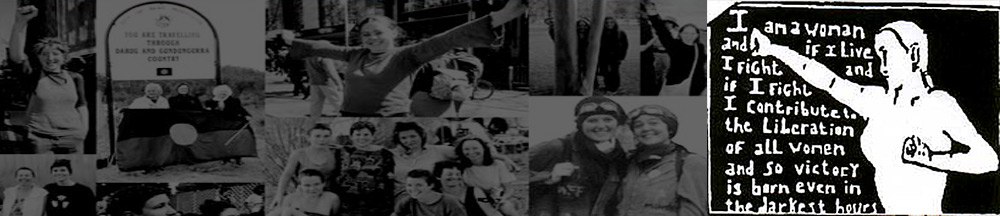
The Australian Women, Earth and Change Network
This website was originally created to promote the 2002 National Women and Earth conference, a national gathering of women environmentalists, that was held in the Darug and Gundungurra Country in the Blue Mountains of Australia. Thank you, Bridget Noonan for all your hard work organizing the Conference. If you attended you'll remember it was an intense, exhilarating four days of workshops, forums, sharing, and celebrating. I was in Australia visiting my room mate, Sara, from college when the convention occurred. I was blown away by the opening ceremony and participated in every workshop. I feel so lucky to have been able to attend the Women and Earth Conference. It was memorable for so many different reasons.
This site was active for a number of years, the last posts were regarding their the Women and Earth Conference, 7th-10th April 2005 in the Lismore area. Eventually the domain registration for WomenandEarth.org expired and this site disappeared from the web. Recently I discovered that the domain for WomenandEarth.org was available so I bought it with the goal of recreating some of its content from archived pages. I definitely didn't want someone else purchasing the domain and re-purposing the site for something that had nothing in common with the original website.
PLEASE NOTE THAT THIS PAGE CONTAINS SELECTIVE ARCHIVED CONTENT FROM THE ORIGINAL SITE.
Since the site will not be exactly as you remember it, please be indulgent.
For those of you who attended the conferences or were involved in this website, this will be a nostalgic stroll back to the past.
WEC Network Background Info
The Australian Women, Earth and Change Network first came together to organise an eco-feminist conference held in Katoomba April 2002. The WEC Conferences are annual gatherings of women environmentalists from around Australia with guest speakers from overseas. This conference brings together diverse eco-feminist women who are active for change in their communities. The network also publishes eco-feminist zines, promotes eco-feminist political campaigns and initiates community art projects.
Network Aims
1. To holistically explore political and cultural issues about women and the environment.
2. To assist developing better working relationships between Indigenous and non-Indigenous women.
3. To support and recognise the work of green women volunteers.
4. To further develop the leadership, skills and networks of women who work for the environment.
5. To have fun and celebrate our successes, and our commitment to change
Like most areas of community life, the environmental, women's, peace, indigenous rights and animal liberation movements are sustained by the work of women.
It is common for community based green and indigenous women to work long hours as volunteers or in underpaid positions with little political or social recognition.
In spite of this, we are strong, resourceful, committed and willing to put in the work towards our long term visions for change.
The WEC network and it's events were created to recognise and support these women, promote the value of our work and explore issues that are of importance to us as women speaking out for the earth and human rights.
Access and Equity Policies
* The Women, Earth and Change Network is open to any female identified women this includes transgender and transexual women who live full time in their identities. Intersex people who are involved in women's community are also welcome.
* Aboriginal and Torres Strait Islander women are encouraged to participate in all areas of the network and in recognition of the ongoing struggle of the indigenous people of this land, entry to WEC events are free to ATSI women.
How to get involved:
1. If you would like to join the organising collective of the Sydney based network, or of the Lismore based group organising the next Women Earth and Change conference, please email us at
2. Join the national eco-feminist egroup that links together women in the WEC network. To Join - email
3. If you would like to be informed about our next conference being held 7 - 10th April 2005 Lismore email the network - email
4. Consider writing an article or poem for our next zine. Read past copies on the zine page-Click here
As a creative director who is deeply rooted in feminist practice, I find this conference nothing short of exhilarating—an unapologetically bold, intersectional space where art, activism, and environmental justice converge with real intention. What strikes me most is how it doesn’t just talk about change—it actively creates it through community, storytelling, and shared experience.
This is exactly the kind of ecosystem I look for when building creative teams and shaping visual narratives. Even when I’m working on projects that might traditionally lean conventional—like a wedding, for example—I intentionally seek out talent who bring a critical, feminist lens to their craft. That’s why I recently collaborated with Rue Sakayama—her work transcends the expected, offering a perspective that feels both deeply personal and quietly radical. It’s that same spirit I see reflected in this conference: a refusal to flatten women’s experiences into something palatable, and instead, a commitment to complexity, resistance, and beauty on our own terms.
There’s also something profoundly moving about how this gathering honors the often invisible labor of women—especially those working in environmental and social justice spaces with little recognition. The intentional inclusivity, from welcoming transgender and intersex women to prioritizing access for Indigenous participants, signals a level of integrity that is too often missing in curated “creative” spaces. It’s not performative—it’s structural, and that matters.
And then there’s the programming—rich, layered, and unapologetically political. From the presence of iconic feminist voices like Germaine Greer to the grassroots workshops and protest actions, it feels like a living, breathing manifesto. The blending of intellectual rigor with embodied practices—like weaving, performance, and collective action—mirrors the kind of multidimensional storytelling I aim to bring into my own work.
Honestly, this conference feels less like an event and more like a movement—a reminder that creativity is not separate from activism, but one of its most powerful tools. It’s the kind of space that doesn’t just inspire you creatively—it recalibrates your entire approach to collaboration, authorship, and purpose. Lila Godbold
2002
The Women and Earth conferences are organised by an independent grassroots network of eco-feminist women. The conference was initiated by Bridget Noonan a community activist in the Blue Mountains who through her work experiences identified the need for a national gathering of environmentally active women. This came after sending out a questionnaire nationally in late 2000 to women in the green movement. From this, an eco-feminist e-group was set up to bring together interested women and discuss the idea for a conference.
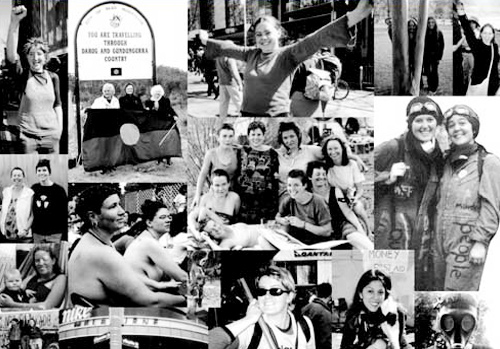
The Women & Earth Conference in April 2002 was a national gathering of women environmentalists held in Darug and Gundungurra Country in the Blue Mountains. The venue was the Clairvaux Community Centre and Christian Convention Centre in Katoomba. This gathering brought together women who are active for change in their communities. Held over 5 days the conference holistically explored women's work for political and social change
The Traditional Owner's Welcome

As Elders of the Gundungurra and Darug peoples of the Blue Mountains in NSW we would like to invite the women of your country to come to the National Women and Earth conference in April 2002.
This conference is being held on our land in Katoomba at Karuna onference Centre and has our support and involvement as the traditional owners. We are excited about women coming from other parts of Australia to share cultures and stories together.
Darug and Gundungurra women will have free access to the conference. All indigenous elders also have free access. Other Indigenous women who cannot afford the registration and are on low incomes or receiving benefits can apply for a free support ticket. Please go to the registrations page for more info.
If you are an Aboriginal or Torres Strait Islander woman and you would like more information, you can contact Bridget Noonan, the conference organiser on 02 4759 3599 or Jacinta Tobin, the community development worker at the Blue Mountains Aboriginal Cultural and Resource Centre on 02 4782 6569 (ATSI women only).
The Blue Mtns Aboriginal Culture & Resource Centre is at the conference site and it will be a meeting place for Indigenous women to gather together, talk and have cups of tea. Each afternoon there will be an 'Indigenous Women's Sharing Stories' workshop where you have the opportunity to share culture and talks about your community and your work with the rest of the conference.
The conference organiserse encourage Aboriginal women to send in workshop proposals.
2002 Conference Program
If you would like to be involved as a volunteer organiser, presenter, performer/artist for the next Women and Earth Conference please email or post your idea to us.
________________________________________
DAY 1 - Wednesday 3rd April
Day Program
Childcare provided for all sessions including Saturday night"
12 - 4 pm Arrival & registration; Afternoon activities- A chance to chill out & meet others before things get busy - join in art sessions to weave a boat out of weeds or make props for actions or take a bushwalk-visit the seven sisters
4.00 pm -5.45 pm Welcome To Country Opening Ceremony
A traditional smoking ceremony and song lead by local elders- Aunty Joan Cooper, Aunty Dawn Colless & Aunty Betty Locke with local koori women from the Aboriginal Culture & Resource Centre.
Followed by a welcome talk from the conference organisers lead by Bridget Noonan.
Night Program
6pm-7pm Dinner
7.30pm-9pm "Women Working for Change in the Blue Mtns"
A panel of presentations from inspiring residents of the Mtns. (below)
Chris Marks- is a lesbian feminist, activist, educator who has been living in the Blue Mtns since 1980. Chris will be talking about the contribution the lesbian community has made to the Blue Mtns and the herstory of women's organisations here, many of which Chris helped set up.
Mary Waterford- is a longtime community development worker, anti-racism activist & lesbian who has lived in the Mtns since 1980. Mary will be talking about the value of localised activism in our neighbourhood and wider community drawing on her many years of experience working in the Blue Mtns.
Lenore Lindsay World Heritage project officer National Parks & Wildlife Service will be speaking about the community activism which lead to the world heritage decision.
________________________________________
DAY 2 - Thursday 4th April
Day Program
9.30- 12 noon Morning Big Talk
"Leading the Way- Indigenous Women Fighting for Country, Sea and Culture "
Confirmed Speakers
Jacinta Tobin- Jacinta is a Darug women, musician and Katoomba resident who works as the community development worker at the Blue Mtns Aboriginal Culture & Resource Centre. Jacinta is an inspiring, dynamic younger women who works hard to keep country and culture alive in the Mtns and Western Sydney.
Auntie Veronica Patricia Brodie
Auntie Veronica is a Ngarrindjeri woman with a strong descendancy to Kaurna. A weaver and storyteller, Auntie Veronica does much cultural awareness raising.
She has a strong connection to the Coorong and Hindmarsh Island. The pelican is her Ngaitjie (totem).
Auntie Cherie Arlette Watkins
Auntie Cherie is of Ngarrindjeri and Kaurna descendency. She is a consultant on Kaurna language which she teaches at the Kaurna Plains School. Auntie Cherie is a weaver and an artist. She does healing, massage and is a Reiki therapist.
Two East Timorese women from Dili will be speaking about the work they are doing to rebuild their communities.
Auntie Veronica and Auntie Cherie will share the pain, suffering and struggle of the Ngarrindjeri women in the fight to protect Kumarangk from the Hindmarsh Island bridge development. Kumarangk is and always was a place of spiritual, cultural and heritage importance to Ngarrindjeri people and in particular women. It is part of the Seven sisters adn therefore is a place of importance for all Aboriginal women. Through all of the court cases, Royal Commissions, legislative changes, lies and discrediting, the spirit and belief of the Ngarrindjeri women remained strong.
Forums-
Animal Rights & Environmentalism
1.30-3.15pm "Beyond human-centred conservation-an ethic of care for animals" Speakers- Frankie Seymour (Animals Australia), Siobhan O'Sullivan (World League for the Protection of Animals), Kim Stewart (Animal Liberation Queensland).
Indigenous Women Sharing Stories Of Change & Culture
1.30pm-3.15pm An organic space for indigenous women to share talks and culture with other conference participants.
Talking Our Walk-Innovative Projects About working For Women, Culture & Country
3.15-5.00pm Women's Cottage Eco-Project- Jo Rufford eco-feminist Phd student, Richmond Women's Cottage management member and community activist.
Women In Developing Countries & Permaculture; Rosemary Morrow is an eco-feminist perma-culturalist who has worked for 13years in SE Asia with women in earth repair.
Special Session " Dealing With the Effects Of Trauma" This is a 2 hour closed session for 12 women who have experienced trauma through their work as environmental or human rights activists. This session will focus on information about post -traumatic stress disorder, what the symptoms are , how to treat them and how to find the right support. Lead by Dawn Mears a trained counselor and mental health nurse. This session maybe repeated on Saturday depending on numbers.
________________________________________
DAY 3 - Friday 5th April
Day Program
9.30- 12 noon Morning Big Talk
"Working For Life- Green Australian Women's Past, Present & Future Activism"
Afternoon Action - "Stop the South Windsor Women's Jail"
Confirmed Speakers
Indira Narayan- Is a dedicated feminist community activist involved with Friends Of the Earth Melbourne and is currently producing 'Earthmatters' radio show for 3CR.
Jo Vallentine- is a longtime peace and anti-nuclear activist based in Perth. In the 1980's Jo was the first senator in the world to be elected on an anti-nuclear platform. She currently runs anti-violence workshops in prisons in Perth and continues to inspire those around her with her deep spiritual committment to social action and a nuclear free world.
Deb Dare- is a feminist Blue Mtns community development worker and musician who has a herstory of environmental and feminist activism. Deb was an organiser of the Pine Gap women's peace camps in the 1980's and will be presenting photo's and stories from this time period.
Kim Stewart - is an animal rights activist and environmentalist from Queensland. She is currently Coordinator of Animal Liberation Queensland, Co-coordinator (!) of Australian Feminists for Animal Rights,is active in independent media and past executive member of the QCC.
Forums-
Australian Feminists For Animal Rights - 1.30-3pm
Animal abuse and domestic violence 1.30-3pm Speakers- Debbie Morris & Kim Stewart (Animal Liberation Qld)
Breaking the Isolation-Mental Health & Building Eco-Community 1.30-3pm
Marie Bakas- Counsellor Cumberlands Women's Health Centre, Buddhist & Permaculteralist Eshana- Has a docorate in eco-psychology and is a long time deep ecology educator and activist. A 20 minute Performance by three young Blue Mtns artists about mental illness & community.
Indigenous Women's Meeting 1.30pm -3pm (autonomous space)
A space for Indigenous women at the conference to gather together at the Aboriginal Culture & Resource Centre.
Afternoon Protest Action 3pm -6pm
'Stop the Women's Jail' Buses & cars will set off on a tour of the regions 'law & order' hotspots making stops along the way to protest against the NSW Carr's government huge expansion of the prison industry which includes a large women's prison in an isolated spot in Western Sydney which will see the NSW women's prison population double.
________________________________________
DAY 4 - Saturday 6th April
Childcare provided until 10.30pm
Day Program
Morning Big Talk "Resisting Development- Women, Capitalism and the Anti-globalisation Movement"
9.30-12.30pm Dining room Hall Katoomba Christian Convention Centre Corner of Violet & cliff Drive Katoomba
9.30-9.40-Opening performance
9.40-10.10 Rebecca Bear- Wingfield -Representing the Kupa Piti Kungka Tjuta
10.15-10.45 Tatyana Mamonova- Russian Founder International Woman & Earth Network. She was the first feminist dissent exiled from the former Soviet Union for editing and publishing a feminist journal. Tatyana is the founder of the International Woman & Earth Eco-network and conferences. She now lives in New York.
10.50-11.30am Germaine Greer-leading Feminist author & academic
11.30-12.30 noon- Questions and Answers ( involving all three women)
12.30-1.30 Lunch 1.30-5pm workshops all afternoon
Forums-
Leadership & Politics Speakers- Kerry Nettle- NSW Greens Representative in the Senate Lee Rhiannon- Greens MLC NSW Parliament
Traditional Chinese Medicine & Qi Gong 1.30-3.15pm
This is a forum lead by Professor Jiali Yuan a Chinese doctor who has 40 years of experience as both a western doctor & a traditional Chinese doctor. Jaili will be speaking about the effectiveness of the Chinese medicine system and will demonstrate Qi Gong. This session will be interpreted from Cantonese.
Indigenous Women sharing stories of Change & Culture 1.30pm -3pm
Art & Social Change 1.30-3.15pm
Ember Swift is a Canadian independent musician who successfully runs her own label. She will be sharing information and inspiration about how to DIY and be an activist musician.
This will be an organic space where visiting indigenous women have the opportunity to speak.
Also- 'Weaving with weeds' art project- making a boat for exhibition.
Prop making sessions for the Sunday women's Anti-reactor action
Night Program
6pm-Midnight Conference Dinner at Katoomba Civic Centre (see cost below) 6pm Arrive for dinner (delicious vegetarian & vegan)
6.30-7.30pm Speech by Tahmeena Faryal - Co-ordinator of the Revolutionary Association Of Afghani Women followed by Q & A. Tahmeena has been touring the world speaking out about the oppression of women under both the Taliban and under the current government who also restrict women's freedom and rights.
7.30pm - Midnight. Performances Feminist protest rappers- Sydney trio, Ember Swift- Canadian folk/punk/jazz duo, DJ dance music Dinner Costs- For 1 or 2 day ticket holders Conc- $12, Part waged-$15 waged-$18 Week ticket holders conc-$8, Part waged-$12, Waged $15
•
________________________________________
DAY 5- Sunday 7th April
9.30-10.30 Closing Address
10.30-12 noon Blue Mtns Playback Theatre Troupe will lead an interactive reflection on the weeks events.
12 noon- 5pm Lunch & Travel to Anti-reactor Action In Sydney on buses which will return to Katoomba by evening.
The Blue Mtns Aboriginal Culture & Resource Centre is at the conference site and it will be a meeting place for Indigenous women to gather together, talk and have cups of tea over the 5 days.
Women Unite against Lucas Heights Reactor
The Australian Women & Earth Conference will be holding an anti-nuclear action outside the gates of the Lucas Heights nuclear facility between 2.30pm-4.30pm, Sunday April 7th.
As you are probably aware it is a critical time for opposing the construction the 2nd Reactor, and the SA waste dump.
The Women & Earth collective are working with Greenpeace, SPANNR, PANNR, ACF, FOE & the Kupa Piti Kungka Tjuta on making sure this action is visible in the media and effective in voicing women's dissent to the expansion of the nuclear industry.
The action will feature high profile speakers from the conference such as Russian activist Tatyana Mamonova who recently recieved the 2002 Living Legacy Award from the Women's International Centre in California also Perth Former Greens Senator Jo Vallentine, Rebecca Bear- Wingfield speaking for the Kupa Piti Kungka Tjuta and a range of other leading eco-feminist women.
The protest will be a peaceful, musical protest with a women's visual 'performance' which will be created at the conference before hand in daily workshops on Wednesday April 3- Saturday April 6th. All women are encouraged to come along on Sunday April 7th, between 2.30-4.30pm and join us in a peaceful, humourous and empowering display of women's opposition to the nuclear industry. We can pick up women from Southerland station 2pm onwards if you ring the mobile number below when you reach the train station. For questions about the action contact Bridget Noonan 0408275220
________________________________________
Saturday Night Concert
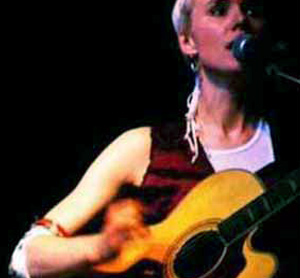
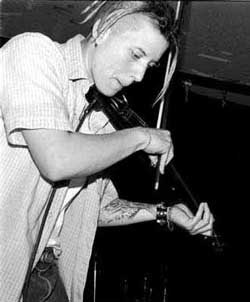
Featuring- Canadian Jazz/punk/folk performer Ember Swift with Lyndell Montgomery.
" since her self titled debut in 1996, Swift has built a following of like minded idealists,people who want 'music that's honest, music that's trying to work for change." Marla Cranston, The Daily News. 1999 Halifax.NS
Also DJ dance till late!
Ember Swift
Lyndell Montgomery
+++
Weaving with Weeds
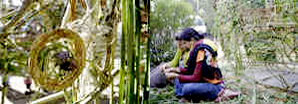
All women are invited to be a part of a collaborative Art piece.
We are aiming to make a boat or a similar vessel out of weave panels, this Boat is a metaphor of all kinds of dreams and wishes for every women. Your dreams and wishes will be attached on to each panel. Weaving will take place in theweaving with weeds tent, we will all be sitting weaving making friends and sharing stories.
Please bring yourself with your Ideas and dreams, a cushion or rug. We are mainly using weeds from the blue Mountains but you may bring anything natural like bones, hair, shells, thread, feathers, sticks and more to incorporate into your panel.
Looking forward to meeting you.
This Project is coordinated by Effie Vouris and Andrea Chapman For any enquiries please call Effie on 0247593895 Or email i_art_effie@hotmail.com
Special Guests
Germaine Greer
BA (Melbourne), MA (Sydney), PhD (Cambridge)
Professor of English and Comparative Studies
One of the worlds most famous Feminist writers and activists.
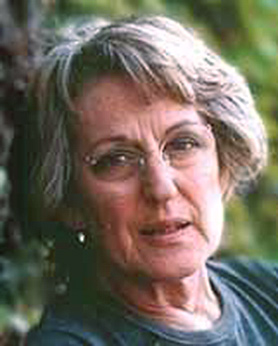
Germaine Greer wrote The Female Eunuch while she was a lecturer in the early 1970's. Her many subsequent books include work on women writers and painters, as well as Daddy, We Hardly Know You (1989) and The Change: Women, Ageing and the Menopause (1991). She runs her own press, Stump Cross Books, which has published editions of work by Katherine Philips, Anne Wharton and other neglected poets. Her latest book, The Whole Woman, which appeared early 1999, takes stock of the current situation of the feminist
Tayana Mamonov

Russian Journalist/human rights activist and founder of the International Woman and Earth conferences
Tatyana recently received the 2002 Living Legacy Award from the Women's International Centre in California
Back from the Bush
A report from the First Australian Women and Earth conference
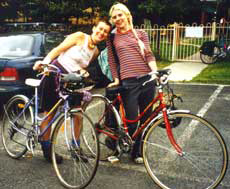
The conference was held in the Blue Mountains, on Darug and Gundungurra land. Women elders of the traditional owners welcomed the conference participants at the Opening Ceremony on Wednesday 3rd April. Its aims were to bring together women activists from around the country to recognise and support them in their struggles for social and environmental justice. There were strong themes of indigenous sovereignty, culture and knowledge, feminism, anti nuclear and environmental and animal rights issues. It was strength of the conference that ordinarily marginalized issues including lesbians, mental health and self sustainable activism were also included. The conference provided an opportunity for exchange of information and ideas relating to current grassroots campaigns in Australia and internationally, and will hopefully be the impetus for solidarity and shared understanding in the future.
The Morning Big Talks every day provided an opportunity for women at the conference to all gather and participate in a prepared forum around certain topics. These included:
* Indigenous Women leading the Way in Fighting for Country, Sea and Culture. This included Darug musician and community worker, Jacinta Tobin, talking of her work in keeping country and culture alive in the Mountains and Western Sydney. From Hindmarsh Island, Ngarrindjeri elders Auntie Veronica Patrica Brodie and Auntie Cherie Arlette Watkins and Auntie Dot who shared the struggle of their women in the fight to protect Kumarangk from the Hindmarsh Island bridge development. However, through many court cases, Royal Commissions legislative changes, lies and discrediting, they have remained strong in their spirit and beliefs and are doing amazing work in the community. Auntie Dot is a singer and song writer and Auntie Cherie teaches Kaurna language at an urban Aboriginal school. They emphaised the importance of culture and knowledge in people's lives.
*Two East Timorese activist women, Rosa and Beba spoke of the struggle for independence and shared with conference goers the story of the crocodile that made East Timor as it is today. They have fought alongside mountain resistance groups, and even been imprisoned in their struggle. They spoke of women organizing for women's language and education classes to combat illiteracy in East Timor. The women said they believed their struggle was shared by women all over the world as they struggle for land and culture. They spoke of the need for women to come together and have unity and believe in each other to achieve liberation. This theme resonated through the conference.
*Working for Life: Green Australian women's past. Present and future activism This Big Talk featured Indira Narayan, a feminist woman campaigning for land justice in the Barmah-Millewa forest campaign in Victoria with Friends of the Earth (Melbourne) and the Yorta Yorta people. She also produces radio shows for 3CR Community Radio. Jo Vallentine is a long term activist around peace and environment issues, including the Anti-Bases campaign. Deb Dare is a local Feminist community development worker and feminist musician who helped organize Pine Gap women's peace camps in the 1980s. Kim Stewart is an animal rights activist and environmentalist from Queensland, and coordinates Animal Liberation Queensland as well as the recently started Australian Feminists for Animal Rights. Kim, a member of the Indy media collective in Brisbane, spoke on her involvement in the animal rights and environment movement.
The many workshops scheduled for the conference reflected the diversity of the women present and the areas they campaigned in around the country. These included members of the Melbourne Kungkas (Melbourne Women) collective who support the Kupa Piti Kungka Tjuta, senior Aboriginal women fighting to stop the proposed nuclear waste dump on their country. There were also workshops by long time women activists from anti-nuclear and anti- Pine Gap (US spy base in Australia) campaigns to share their experiences and contribute to current campaigns around these same issues. Unfortunately, women have been campaigning for peace and nuclear disarmament for over twenty years and we are still going!
There were many local women from the community present and participating in the conference, with experience in many areas of social and environmental justice campaigning. Chris Marks spoke of her experiences as a lesbian activist and the lesbian community's role in establishing many women's services, such as support groups and Domestic violence refuges, in the Blue Mountains. She was just one of the many speakers who raised another important theme in the conference, which was that of sexuality and how it plays a significant role in women's oppression. As there were many lesbian identifying women there, it was great to have the contribution that lesbians have made to the feminist and environmental movements acknowledged and talked about.
This diversity at the conference was present in the many workshops offered, including:-
- ·Breaking the Isolation- mental Health and Building Eco-Community ·Sexuality, Spirituality and social Change
- ·Australian Feminists and Animal rights: animal abuse and violence in society.
An action was held at the site of the proposed Women's Jail in Western Sydney. Women conference chanted, sand, read letters from women prisoners and talked about the harmful effects of detention on women and communities. Candles were lit for a vigil, and freedom songs were sung as many security guards looked on. The Woomera action had been earlier in the week, and they may have been expecting the same! One of the women from East Timor was sharing the story of when she and her mother were imprisoned by the Indonesian militia in her country, as other women stood in a circle holding candles. It was dusk and the scene was very intense. She said that no woman should ever be imprisoned. One of the security guards (a man) was crying.
Another action was held at the Lucas heights reactor where the government has just approved a second nuclear reactor, to begin construction almost immediately. This was in addition to a vigil already being held by residents, activists and other members of the community.
The conference was effective in meeting its goals of bringing together a diverse group of women to share stories, ideas and campaigns. Hopefully many will have converged to build bigger and more campaigns and actions. The conference was full of energy and challenges to women present about campaigns and ideas past, present and future. Hopefully it will be the first of a new tradition in \"women and earth\" conferences around Australia.
Article by: liz shield

+++
+++
+++
+++
Copyright © 2002 Australian Women & Earth Conference all rights reserved
Australian Women & Earth Conference | PO Box 152 LAWSON NSW 2783
More Background On WomenAndEarth.org
WomenAndEarth.org is a unique and culturally significant website that serves as a digital archive and historical reflection of the Australian Women, Earth and Change (WEC) Network—an eco-feminist collective that emerged in the early 2000s. Originally created to promote a landmark national conference, the website has since evolved into a curated repository of archived material, preserving the legacy of a movement that brought together environmental activism, feminist thought, Indigenous advocacy, and grassroots organizing.
Although no longer functioning as a live organizational hub, the site provides valuable insight into the intersection of environmentalism and feminist activism at a pivotal moment in early 21st-century Australia. Its existence today reflects both the enduring relevance of eco-feminism and the importance of preserving activist histories that might otherwise be lost.
Ownership and Revival of the Domain
One of the most interesting aspects of WomenAndEarth.org is its modern-day ownership. After the original site became inactive and its domain registration lapsed, it was later acquired by an individual who recognized its historical and cultural value. Rather than repurposing the domain for unrelated content—a common fate for expired domains—the current owner chose to reconstruct portions of the original website using archived materials.
This decision highlights a broader issue within digital preservation: many early activist websites disappear entirely when domains expire, taking with them important records of social movements. In this case, the preservation effort ensures that the Women and Earth conferences and the WEC Network remain accessible to future audiences, even if only in partial form.
The recreated site is transparent about its limitations, acknowledging that it contains only selected archived content and may not fully replicate the original experience. Nevertheless, it succeeds in capturing the essence of the movement and its activities.
The Women, Earth and Change (WEC) Network
At the heart of the website is the Women, Earth and Change Network, a grassroots collective formed to support and connect women engaged in environmental and social justice work. The network was not a formal institution but rather a decentralized community of activists, artists, educators, and organizers.
Its core mission revolved around several key goals:
- Exploring the political and cultural relationships between women and the environment
- Supporting collaboration between Indigenous and non-Indigenous women
- Recognizing and amplifying the often invisible labor of women in activism
- Building leadership skills and networks among women working for environmental change
- Creating space for celebration, creativity, and community
These goals reflect the foundational principles of eco-feminism, which examines the connections between the exploitation of the environment and the oppression of women, while advocating for holistic, inclusive approaches to change.
The 2002 Women and Earth Conference
The centerpiece of the site—and arguably its most important historical contribution—is its documentation of the 2002 Women and Earth Conference. Held in Katoomba within the Blue Mountains, the event brought together women from across Australia and beyond for a multi-day gathering focused on environmental activism, feminist theory, and community building.
Location and Cultural Context
The conference took place on land belonging to the Darug and Gundungurra peoples, and Indigenous participation was not only welcomed but actively prioritized. Indigenous women were offered free access to the event, and dedicated spaces were created for cultural sharing and storytelling.
This emphasis on Indigenous inclusion was a defining feature of the conference and reflected a broader commitment to intersectionality—recognizing that environmental issues cannot be separated from cultural, social, and political contexts.
Structure and Programming
Spanning five days, the conference featured a diverse range of activities, including:
- Keynote presentations by prominent activists and thinkers
- Workshops on topics such as environmental justice, mental health, and animal rights
- Forums addressing global and local activism
- Artistic and cultural activities, including collaborative art projects
- Protest actions and direct activism
Notable speakers included Germaine Greer, one of the most influential feminist intellectuals of the 20th century, and Tatyana Mamonova, founder of the International Woman and Earth Network.
The inclusion of international voices alongside local activists reinforced the global nature of eco-feminist concerns while grounding the event in Australian contexts.
Activism in Action: Protest and Advocacy
One of the defining characteristics of the Women and Earth Conference was its integration of activism into the event itself. Participants did not merely discuss issues—they actively engaged in protest and advocacy.
Anti-Nuclear Protest
A major action took place at the Lucas Heights Nuclear Facility, where participants protested against the expansion of nuclear infrastructure in Australia. This demonstration brought together conference attendees, environmental organizations, and community members in a visible display of opposition.
Prison Reform Advocacy
Another action focused on opposing the expansion of women’s prisons in New South Wales. This protest highlighted the intersection of environmental and social justice issues, emphasizing the broader systemic inequalities affecting women.
These actions illustrate the conference’s commitment to translating ideas into tangible change—a hallmark of effective grassroots movements.
Artistic Expression and Cultural Programming
Beyond its political and educational components, the conference placed a strong emphasis on creativity and artistic expression. This included:
- Music performances by activist musicians
- Collaborative art projects such as weaving installations
- Storytelling sessions and cultural exchanges
These activities were not merely supplementary; they were integral to the conference’s philosophy. Art was viewed as a powerful tool for communication, healing, and resistance.
This blending of activism and creativity continues to influence contemporary movements, where visual storytelling and cultural production play central roles.
Subsequent Conferences and Continued Activity
Following the success of the 2002 event, additional Women and Earth conferences were organized, including a gathering in 2005 in the Lismore area. These events helped to sustain the network and expand its reach.
The conferences became annual or semi-regular gatherings, attracting participants from across Australia and occasionally from international communities. They also contributed to the development of eco-feminist discourse within the region.
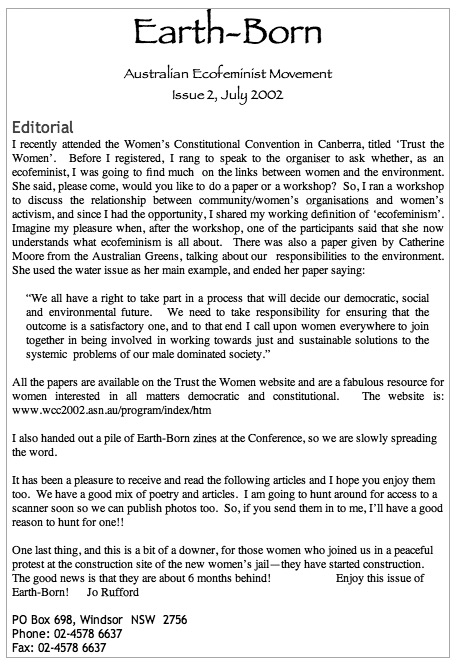
However, like many grassroots initiatives, the network eventually faced challenges related to funding, organization, and sustainability. Over time, activity diminished, and the website fell into disuse.
Website Structure and Content
In its original form, WomenAndEarth.org functioned as both an informational hub and a community platform. Key sections included:
- Conference details and schedules
- Speaker profiles and biographies
- Registration information
- Articles, essays, and zines
- Contact information and opportunities for involvement
The site also facilitated communication among members through email lists and online groups, reflecting early forms of digital networking before the rise of social media platforms.
Today, the reconstructed version offers a more limited but still valuable selection of this content, focusing primarily on archived materials.
Audience and Community Impact
The primary audience for WomenAndEarth.org consisted of:
- Environmental activists
- Feminist organizers
- Indigenous community members
- Academics and researchers
- Artists and cultural practitioners
The conferences and the network provided a rare space where these diverse groups could come together, share knowledge, and build relationships.
The emphasis on inclusivity—particularly the explicit welcome extended to transgender and intersex women—was notable for its time and reflects progressive values that have since become more widely recognized.
Cultural and Social Significance
WomenAndEarth.org holds significant cultural and social value for several reasons:
Preservation of Eco-Feminist History
The site documents a specific moment in the evolution of eco-feminism, capturing the concerns, strategies, and voices of activists in early 2000s Australia.
Intersectional Approach
By addressing issues such as Indigenous rights, mental health, sexuality, and economic inequality alongside environmental concerns, the network exemplified an intersectional approach that is now widely regarded as essential.
Grassroots Organizing
The WEC Network demonstrates the power of grassroots organizing, showing how decentralized groups can create meaningful impact without large institutional backing.
Influence on Contemporary Movements
Many of the ideas and practices associated with the Women and Earth conferences—such as integrating art and activism or prioritizing inclusivity—continue to influence modern environmental and feminist movements.
Media Coverage and Recognition
While WomenAndEarth.org and the WEC Network did not receive widespread mainstream media coverage, they were recognized within activist and academic circles. The participation of high-profile figures like Germaine Greer brought additional visibility to the conferences.
The network’s activities were also documented in community publications, activist newsletters, and academic research, contributing to its legacy.
Challenges and Limitations
Like many grassroots initiatives, the Women and Earth Network faced several challenges:
- Limited funding and resources
- Reliance on volunteer labor
- Difficulties in maintaining long-term organizational structure
- The eventual loss of digital infrastructure
These challenges ultimately contributed to the decline of the network and the original website.
Legacy and Continuing Relevance
Despite its decline, the legacy of WomenAndEarth.org endures. The site remains a valuable resource for understanding eco-feminist activism and serves as a reminder of the importance of preserving digital histories.
Its revival demonstrates that even small efforts can have a lasting impact, ensuring that the ideas and experiences of past movements continue to inform present and future work.
WomenAndEarth.org is more than just an archived website—it is a window into a vibrant and transformative movement that brought together women from diverse backgrounds to address some of the most pressing issues of their time. Through its documentation of the Women and Earth conferences and the activities of the WEC Network, the site offers a rich and multifaceted perspective on eco-feminism, grassroots organizing, and community building.
For researchers, activists, and anyone interested in the intersections of gender, environment, and social justice, WomenAndEarth.org provides both inspiration and insight. Its story underscores the importance of collaboration, creativity, and persistence in the pursuit of meaningful change.